Most Drivers Have Three Years to File a Claim. If a Pothole Caused Your Crash, You May Have Far Less Time.
You hit the pothole before you even saw it. Your car jerked hard to the right, and by the time you regained control, you had already clipped the guardrail or veered into another lane. Or maybe it was a missing stop sign at an intersection, a stretch of road with no warning before a sudden drop-off, or debris left behind from a construction crew that never came back to clean it up.
Whatever the hazard, the question that follows is rarely simple: who is actually responsible for what just happened to you?
Road hazard accidents are different from a typical two-car collision. There may be no other driver to point to. Instead, liability can fall on a private contractor, a property owner, or a government entity responsible for maintaining the road. Each of these carries its own legal process, and when a government agency is involved, South Carolina law adds deadlines and procedural requirements that do not exist in an ordinary car accident claim.
This post breaks down who can be held liable for a road hazard accident in South Carolina, what makes claims against government entities different, and why acting quickly matters more in these cases than almost any other type of accident.
What Counts as a Road Hazard
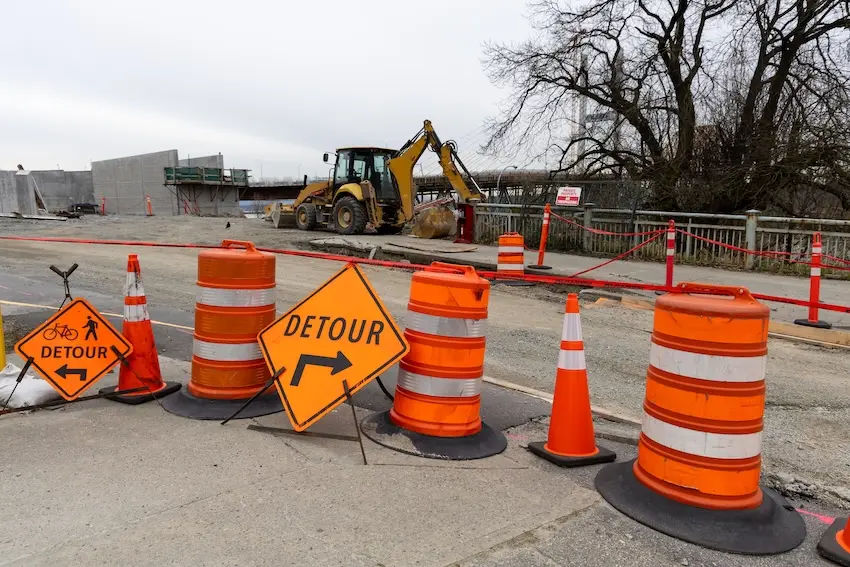
A road hazard is any dangerous condition on or near a roadway that a reasonable driver would not expect and cannot avoid in time. Common examples include potholes deep enough to damage a vehicle or cause a driver to lose control, missing or obscured traffic signs and signals, debris in the roadway from a previous accident or a poorly secured load, uncleared construction materials or equipment, inadequate lighting at dangerous intersections, and crumbling shoulders or unmarked drop-offs.
Not every rough patch of pavement creates legal liability. The hazard has to be dangerous enough that it falls below a reasonable standard of road maintenance, and the party responsible for the road has to have known about it, or reasonably should have known about it, with enough time to fix it or warn drivers.
Who Can Be Held Liable
A Private Contractor or Construction Company
If a contractor left equipment, materials, or an unmarked excavation in or near the roadway, the contractor and the company they work for can be held liable under standard negligence principles. These claims work similarly to any other personal injury case in South Carolina, with the typical three-year statute of limitations.
A Property Owner
In some cases, a hazard originates from adjacent private property, such as debris that washed or blew onto the road, or a tree that fell because it was not properly maintained. The property owner may share liability depending on the circumstances.
A Government Entity
When the hazard exists on a public road and the responsible party is a city, county, or the South Carolina Department of Transportation, the claim is governed by a completely different legal framework: the South Carolina Tort Claims Act.
Why Claims Against the Government Work Differently
South Carolina generally protects government entities from lawsuits under a legal principle called sovereign immunity. The South Carolina Tort Claims Act creates a limited exception, allowing injured drivers to pursue a claim against a government entity for negligent road maintenance, but only under specific conditions and within a much tighter timeline than a typical accident claim.
The Government Must Have Had Notice of the Hazard
Under the Tort Claims Act, a government entity is not automatically liable just because a hazard existed on a road it maintains. The entity must have had actual or constructive notice of the defect and failed to correct it within a reasonable time. In practice, this means proving the agency knew about the pothole, missing sign, or dangerous condition, whether through prior complaints, previous accidents, routine inspection records, or how long the hazard had clearly been present.
A One-Year Notice Deadline, Not Three Years
This is the detail that catches the most accident victims off guard. While a standard South Carolina personal injury claim has a three-year statute of limitations, a claim against a government entity under the Tort Claims Act requires written notice within one year of the date of the accident. Missing this one-year window can eliminate your right to pursue compensation entirely, even though you would otherwise have years left under the standard injury timeline.
The 180-Day Waiting Period
Once notice is filed, the government entity has 180 days to accept or deny the claim. You cannot file a lawsuit until that period has passed, the claim is denied, or a settlement is reached. If the agency does not respond within 180 days, the claim is treated as denied and the case can proceed.
Damage Limitations
Claims under the South Carolina Tort Claims Act are also subject to monetary caps on what can be recovered, and punitive damages are not available against a government entity, regardless of how serious the negligence was.
Why Acting Quickly Changes Everything in These Cases
In a typical car accident claim, having three years to act gives injured drivers room to focus on recovery before worrying about legal deadlines. Road hazard claims involving a government entity do not offer that same room. The one-year notice requirement means evidence needs to be gathered, the responsible agency identified, and a formal notice filed well before most accident victims would think to consult an attorney in an ordinary case.
Identifying the correct government entity alone can be complicated. A single stretch of road in Beaufort County might fall under the jurisdiction of the South Carolina Department of Transportation, Beaufort County, or a municipality, depending on the exact location. Filing notice against the wrong entity, or filing it late while trying to determine the right one, can cost you the claim entirely.
Frequently Asked Questions: Road Hazard Accidents in South Carolina
Who is liable if I hit a pothole and crash in South Carolina?
Liability depends on who is responsible for maintaining that road. If it is a city, county, or state-maintained road, the government entity may be liable under the South Carolina Tort Claims Act, but only if it had actual or constructive notice of the pothole and failed to repair it within a reasonable time. If a private contractor created the hazard, such as through incomplete road work, the contractor may be liable under standard negligence principles.
How long do I have to file a claim against the government for a road hazard accident in South Carolina?
You generally have only one year from the date of the accident to file written notice of your claim against a South Carolina government entity under the Tort Claims Act. This is significantly shorter than the standard three-year statute of limitations for most personal injury claims. Missing this deadline can permanently bar your claim.
What happens after I file a notice of claim against a government entity in South Carolina?
The government entity has 180 days to accept or deny your claim. You cannot file a lawsuit during this waiting period unless the claim is denied or a settlement is reached. If the agency does not respond within 180 days, the claim is considered denied and you may then proceed with a lawsuit.
Can I recover the same compensation from the government as I could from a private driver?
Not entirely. Claims under the South Carolina Tort Claims Act are subject to monetary damage caps, and punitive damages are not available against government entities, even in cases of serious negligence. You can still recover compensation for medical expenses, lost wages, and pain and suffering, but the total amount may be limited by statute.
Do I need to prove the government knew about the road hazard?
Yes. Under South Carolina law, a government entity is only liable for a road defect if it had actual notice, meaning it was directly informed of the hazard, or constructive notice, meaning the hazard existed long enough or was obvious enough that the agency reasonably should have known about it. Proving this often requires maintenance records, prior complaints, or evidence showing how long the condition had existed.

How McDougall Law Firm Builds These Cases
When a road hazard causes your accident, our attorneys move quickly to determine who is actually responsible, whether that is a private party or a government entity, and what legal process applies. For claims involving a government agency, we identify the correct entity, gather the evidence needed to establish notice of the hazard, and file the required notice within the one-year window the Tort Claims Act demands.
That evidence often includes prior complaint records, maintenance logs, photographs and measurements of the hazard, witness statements, and accident reconstruction when needed to establish exactly how the defect caused your crash. We also work with engineering and roadway safety experts when a case requires technical analysis of why a road condition fell below an acceptable standard.
Led by J. Olin “Lin” McDougall, II, our firm has spent over two decades representing injury victims throughout Beaufort and the South Carolina Lowcountry, including cases involving government liability that most firms are not equipped to evaluate correctly under tight statutory deadlines.
If you were injured because of a pothole, missing signage, road debris, or any other dangerous road condition in South Carolina, do not wait to find out whether your case involves a government entity. Contact McDougall Law Firm today for a free consultation. Learn more about how our Beaufort car accident lawyers handle complex liability cases from investigation through resolution.
Call 843-438-4386 today. No fees unless we win.